
What are the International Laws that Thailand has violated in the recent Cambodia-Thailand Conflict? What does it entail for the World’s Stability?
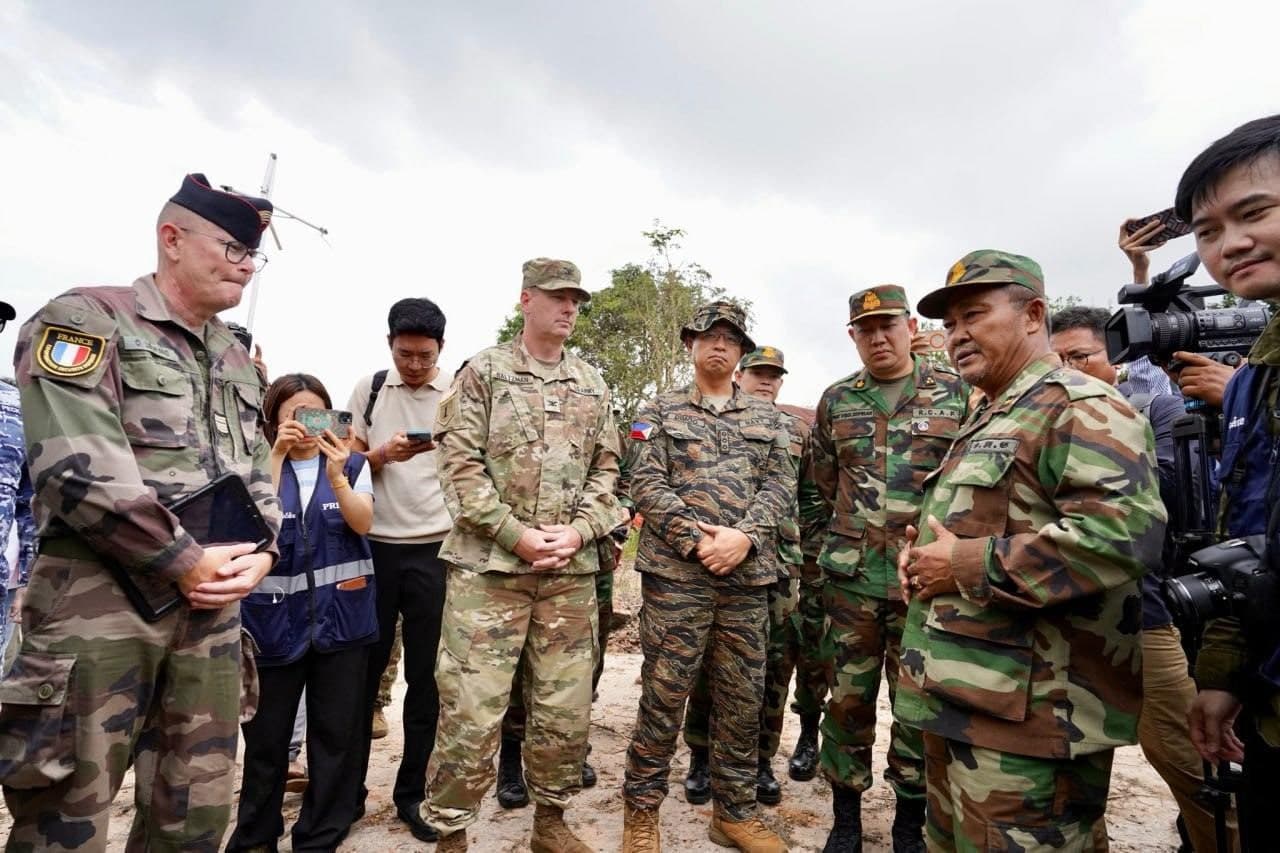
The recent military conflict between Cambodia and Thailand marked one of the most alarming episodes of cross-border aggression in recent Southeast Asian history. What began as a border skirmish quickly escalated into a series of serious breaches of international humanitarian law by Thai military forces. These actions have left a deep wound on Cambodian soil — physically, emotionally, and spiritually — and demand scrutiny under global legal standards.
The following is a detailed account of the key violations committed by Thailand during this conflict and the severe consequences that followed:
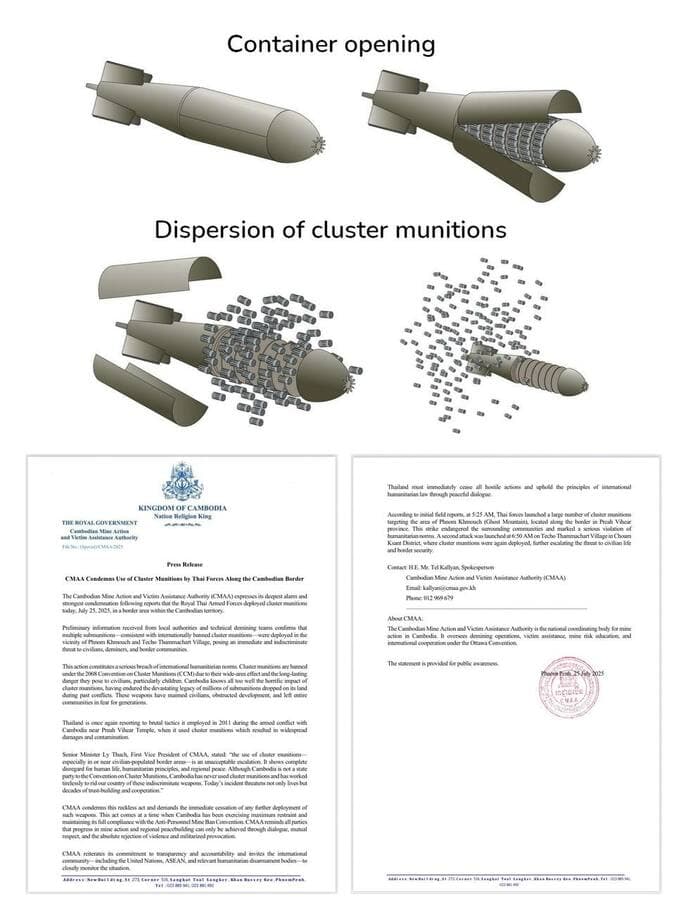
- Deployment of Cluster Munitions (Cluster Bombs)
Incident: Thai artillery units launched cluster munitions into Cambodian territory, striking rural areas in Preah Vihear province.
Legal Context: Although Thailand is not a signatory to the Convention on Cluster Munitions (CCM), the use of such weapons in civilian areas violates the principles of distinction and proportionality under the Geneva Conventions.
Impact: These weapons inflicted significant civilian casualties and contaminated farmland with unexploded submunitions, threatening farmers, children, and entire communities for years to come. The long-term danger undermines both safety and economic recovery in affected areas.
- Attack on Preah Vihear Temple
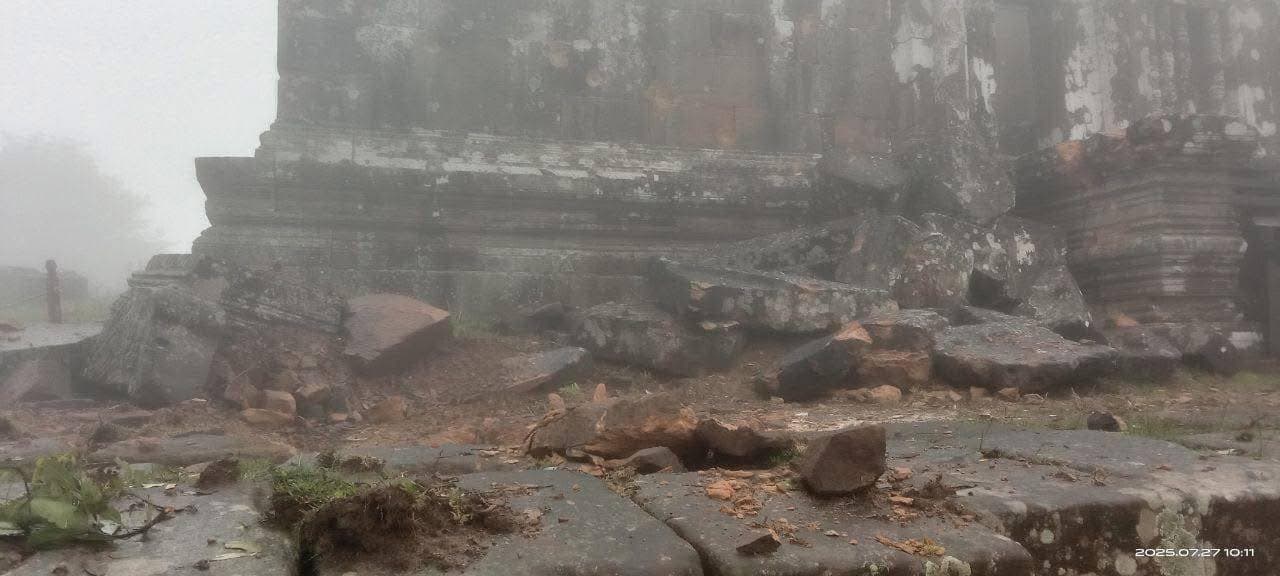
Incident: Preah Vihear Temple — a UNESCO World Heritage Site and a symbol of Cambodia’s cultural legacy — was struck by Thai shells during the conflict.
Legal Context: Under the 1954 Hague Convention for the Protection of Cultural Property, attacks on cultural monuments are strictly forbidden unless they are being used for military purposes, which was not the case in this conflict.
Impact: The damage inflicted on the temple was not only physical but also spiritual and national. For Cambodians, the temple represents centuries of history and identity. Its destruction was widely perceived as an assault on Cambodian heritage and pride.
- Strikes on Civilian and Religious Areas
Incident: Thai forces reportedly bombed residential villages and Buddhist pagodas in the districts of Anlong Veng and Choam Khsant.
Legal Context: Attacks that fail to distinguish between military targets and civilians are violations of Article 51 of Additional Protocol I to the Geneva Conventions.
Impact: Entire families were displaced. Sacred spaces were destroyed. The trauma inflicted on civilians — particularly those who sought shelter in religious compounds — continues to haunt survivors and erode community stability.
.png)
- Mutilation of Cambodian Soldiers
Incident: Cambodian military units later recovered the bodies of fallen soldiers that had been deliberately mutilated.
Legal Context: Common Article 3 of the Geneva Conventions prohibits acts of mutilation and outrages upon personal dignity, even in times of armed conflict.
Impact: These acts shocked the nation. The families of the deceased were denied dignity in mourning, and the Cambodian public was left outraged by the apparent disregard for human life and decency.
- Alleged Use of Chemical Weapons
Incident: There were reports that Thai forces deployed chemical weapons laced with unknown chemical agents, causing severe injuries among Cambodian troops.
Legal Context: The Chemical Weapons Convention (CWC) bans the use of chemical weapons under any circumstances. Such use also breaches customary international law.
Impact: Injured soldiers suffered long-term health consequences, including respiratory damage and skin burns. The use of chemical agents escalated the seriousness of the conflict and raised alarm across the region.
- Perfidious Capture of Cambodian Soldiers
Incident: Thai forces captured twenty Cambodian soldiers through trickery and deception in the early morning on 29th July 2025, after the ceasefire agreement had already been issued and effective on 28th July 2025, 00:00.
Legal Context: Feigning peaceful intentions to carry out attacks or captures is considered perfidy, a prohibited tactic under Article 37 of Additional Protocol I to the Geneva Conventions.
Impact: This act destroyed trust in the negotiation process and fueled suspicion of any future ceasefire discussions. It was a strategic betrayal that deeply offended Cambodian military officials and the public alike.
.png)
- Inhumane and Illegal Detention of Cambodian Security Forces
Incident: Following their capture, the 20 Cambodian soldiers were held without contact, proper medical care, or third-party monitoring.
Legal Context: Under the Third Geneva Convention, prisoners of war are entitled to humane treatment, medical attention, and access to neutral organizations such as the International Committee of the Red Cross (ICRC).
Impact: Two soldiers were recently released — one physically injured and another mentally and psychologically abused. The condition of the remaining 18 remains unknown, causing anguish for their families and fueling national concern. The lack of transparency and humanitarian access stands as a grave violation of both law and human dignity.
.png)
- Violations of Cambodian and Territorial Integrity Violation
Incident: At 11 AM on August 4, 2025, the Thai armed forces, accompanied by heavy machinery such as excavators, entered the An Ses area within Cambodian sovereign territory and even laid barbed wire, despite strong objections from the Cambodian armed forces.
Legal Context: Laying barbed wire in another nation’s land after a ceasefire violates international law concerning territorial sovereignty, ceasefire compliance, and peaceful dispute resolution. It can also be interpreted as an act of aggression or provocation under international legal standards.
Impact: It undermines Cambodia’s national sovereignty, endangers civilian lives, destabilizes the peace process, and causes long-term social, political, and security consequences.
.png)
Conclusion: Caution Arise, Justice Demanded
Thailand’s blatant violations of international law in its aggression against Cambodia expose more than just a regional conflict—they reveal the true nature of a state acting as a villain on the global stage. By targeting civilians, cultural sites, and defying international conventions, Thailand has proven itself willing to break the rules that safeguard peace.
Today, Cambodia suffers—but this is a warning to the world. If left unchecked and overlooked, Thailand’s lawlessness could extend beyond its borders, threatening other neighboring nations, ASEAN, and potentially becoming a danger to international peace. This is not just an isolated act; it is the behavior of a nation testing the world’s tolerance for violence, rebellion, and impunity.
Thailand’s conduct during the recent conflict not only violated multiple provisions of international law but also inflicted deep suffering upon the Cambodian people. These actions must not be ignored. The international community, including ASEAN and the United Nations, is being called upon to ensure that accountability is pursued and justice delivered.
Only through truth, justice, and respect for international laws can peace in the world be truly restored.